
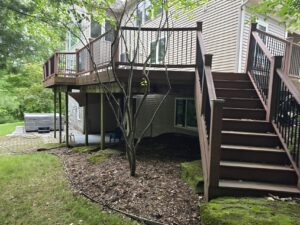
Deck Inspection Checklist: 6 Things to Check Before Using Your Deck This Spring
Quick Deck Safety Summary
Before using your deck in the spring, homeowners should inspect key structural components including support posts, framing hardware, railings, deck boards, fasteners, and signs of insect damage. Catching small issues early can prevent structural problems and ensure your deck remains safe for family and guests.
Introduction
When the snow melts and warmer weather arrives in West Michigan, many homeowners are eager to start using their outdoor spaces again. Decks are one of the most popular gathering spots for relaxing, grilling, and entertaining.
However, Michigan’s freeze-thaw cycles, moisture, and winter snow loads can take a toll on deck structures. Before hosting friends and family on your deck this spring, it’s important to perform a simple inspection to make sure everything is still safe and structurally sound.
Below are six important things homeowners should check before using their deck each spring.
- Inspect Deck Support Posts
Start by examining the support posts that hold up the deck structure. Pay special attention to the area where the posts meet the ground.
Things to look for include:
- Rotting wood
- Cracking at ground level
- Soft or spongy areas
- Post movement or shifting
Small surface cracks in wood posts are normal, but rotting or structural deterioration can become a serious safety issue and should be repaired by a professional.
- Check Deck Framing and Structural Hardware
The framing underneath your deck carries the structural load of the entire system.
Inspect areas where joists connect to beams and where hardware fasteners are installed.
Look for signs such as:
- Missing fasteners
- Corrosion or rust on brackets
- Cracked framing lumber
- Loose structural connections
These connection points are critical to the strength of the deck, and damage in these areas can lead to structural failure if left unaddressed.
- Test Deck Railings and Stair Systems
Deck railings play a major role in safety, especially on elevated decks.
Railings should be strong enough to resist significant pressure. According to building codes, they must typically withstand around 200 pounds of lateral force.
Check for:
- Loose railing posts
- Rotting wood components
- Wobbly stair railings
- Cracked balusters
If railings move when pushed, they should be repaired before using the deck.
- Tighten Loose Fasteners and Hardware
Over time, seasonal movement from temperature and moisture changes can cause hardware to loosen.
Inspect:
- Screws
- Nails
- Bolts
- Structural connectors
Loose fasteners should be tightened or replaced to prevent boards or structural components from shifting and causing injury.
- Inspect Deck Boards for Damage
Deck boards take the most abuse from weather and foot traffic.
Look for boards that are:
- Splintering
- Warping
- Splitting
- Loose
Damaged boards should be replaced promptly to avoid tripping hazards or injuries.
Composite decking materials generally require less maintenance, but even these should be inspected periodically.
- Check for Insect Damage
Wood decks can sometimes attract insects that weaken structural components.
Look for signs of:
- Carpenter ants
- Termites
- Wood-boring insects
Evidence may include small holes, sawdust-like material, or hollow-sounding wood. If insect damage is suspected, repairs should be made quickly before structural damage spreads.
FAQ Section
How often should you inspect a deck?
Homeowners should inspect their deck at least once per year, typically in early spring before regular use begins.
What is the most common deck safety issue?
Loose railings and rotting support posts are two of the most common structural issues found during deck inspections.
Can deck problems be repaired or do decks need replacement?
Many deck issues can be repaired if caught early. However, severe structural damage may require partial or full deck replacement.
How long should a deck last in Michigan?
Pressure-treated decks typically last 12–18 years, while composite decks can last 25–30 years or longer with proper installation.
Conclusion
Regular deck inspections help ensure your outdoor living space remains safe and enjoyable for years to come. Catching small issues early can prevent costly repairs and protect your family and guests from potential safety hazards.
Because Michigan weather can be hard on decks, taking a few minutes to inspect the structure each spring is a smart investment in maintaining your home.
If you notice structural issues during your deck inspection, it’s best to consult a professional deck builder.
Signature Decks & Construction specializes in deck repairs, inspections, and new deck construction throughout Rockford, Grand Rapids, and West Michigan.
If you’d like help evaluating the condition of your deck, contact us today at 616-896-2866 to schedule a consultation.
Author Bio
Scott Kenyon
Owner of Signature Decks & Construction. Scott specializes in designing and building high-quality custom decks throughout West Michigan, helping homeowners create safe and beautiful outdoor living spaces.